Quick Answer: EPAL Pallet Manufacturer in Rajkot
If you are looking for an EPAL Pallet Manufacturer in Rajkot, first confirm whether your customer requires an authentic EPAL-marked pallet or simply a Euro-size wooden pallet. A standard EPAL 1 pallet is 1200 x 800 x 144 mm. PalletPlanet, based in Ahmedabad, can discuss pallet specifications, order quantities and possible delivery to Rajkot; manufacturing location and EPAL authorisation should not be assumed.
If the pallet is being used for international trade, the buyer should also confirm the destination country's requirements for solid wood packaging, including applicable ISPM 15 treatment and marking. The right pallet depends on the cargo weight, handling equipment, storage method, shipment route and required pallet specification.
EPAL Pallets in Rajkot: What Buyers Should Know
For Rajkot engineering workshops, foundries, auto-component makers and dispatch teams, selecting a pallet is not just a rate comparison. A compact casting can put most of its weight on two boards, while a carton stack may overhang the deck. Measure the packed unit load and its support points before choosing the pallet.
An EPAL pallet is a standardized reusable wooden pallet associated with the European pallet-pooling system. Standardized dimensions make planning easier when goods move between warehouses, transporters and distribution centres.
PalletPlanet is based in Ahmedabad and can discuss enquiries for delivery to Rajkot, Shapar-Veraval, Metoda and nearby industrial locations. These are delivery enquiries, not a claim that PalletPlanet operates a factory in Rajkot. Confirm supply arrangements, EPAL identification, lead time and freight before ordering.
What Is an EPAL Pallet?
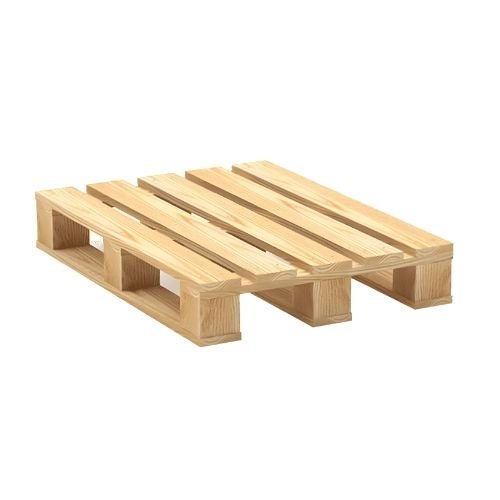
An EPAL pallet is a standardized wooden load carrier designed for repeated handling in logistics and supply chains. The commonly used EPAL 1 pallet measures 1200 x 800 x 144 mm.
Why standardization matters
- Known footprint: The 1200 x 800 mm format helps warehouses plan storage and movement around a consistent pallet size.
- Material handling: Standard pallet construction is intended for routine movement with compatible forklifts and pallet trucks.
- Reusable format: EPAL pallets are intended for repeated logistics use; check any returned or reused pallet for cracks, missing boards, damaged blocks and unsuitable repairs.
- Supply-chain compatibility: A standardized pallet can simplify handling when several parties use compatible pallet systems.
Important: “EPAL pallet” and a generic “Euro-size pallet” are not automatically interchangeable. Authentic EPAL-marked pallets are subject to defined production and repair requirements. If the purchase order says EPAL, ask what marking and evidence of conformity are needed; a pallet measuring 1200 x 800 mm alone is not proof.
EPAL Pallets and ISPM 15 Export Requirements
When solid wood packaging is used in international trade, the shipment may be subject to ISPM 15, the international phytosanitary standard covering certain wood packaging materials. Treatment and marking requirements depend on the applicable export and import rules.
For machine parts, castings or automotive components exported from Rajkot, share the destination country, packaging arrangement and route before dispatch. Genuine newly produced EPAL Euro pallets are heat-treated under EPAL rules, but buyers should still check the IPPC/ISPM 15 mark, its legibility and any shipment-specific documentation. A pallet’s colour is not evidence of treatment.
Do EPAL pallets automatically mean ISPM 15 compliance?
New genuine EPAL Euro pallets are heat-treated to ISPM 15 under EPAL production rules. Verify the actual IPPC treatment mark and destination-country requirements, particularly for used or repaired pallets.
EPAL Pallet Dimensions and Technical Reference
Use this EPAL 1 reference when checking packed machinery-part dimensions, gross weight, fork entry and truck or container loading. It is a specification reference, not automatic approval for point-loaded metal parts or any particular rack.
| Reference | Typical EPAL 1 Requirement | Why It Matters |
|---|---|---|
| Length | 1200 mm | Defines the pallet footprint for storage and transport planning |
| Width | 800 mm | Helps match warehouse, racking and vehicle loading arrangements |
| Overall height | 144 mm | Important for clearances and stacked-load planning |
| Construction | Standardized 4-way-entry wooden pallet format | Entry clearance, board integrity and correct pallet identification affect handling |
| Export treatment | Confirm when required | Destination-country phytosanitary rules should be checked before shipment |
*Load capacity is not a single number that should be applied to every situation. Actual safe loading depends on pallet condition, load distribution, support spacing, handling method and storage or racking conditions.
How to Choose the Right EPAL Pallet
When requesting a quotation for EPAL pallets in Rajkot, include the points below. For castings or machined parts, send a sketch showing contact points and securing method; a gross-weight figure alone can hide an uneven load.
- Pallet specification: Confirm whether you need EPAL 1 or another specific pallet format.
- Load details: Share gross packed weight, carton or crate dimensions, number of layers and any concentrated machine-part loads; confirm where the load contacts the deck.
- Handling method: Mention forklift, pallet truck, conveyor or automated handling requirements.
- Storage method: Specify floor stacking, block stacking or racking, including the rack beam support arrangement if applicable.
- Export destination: For overseas shipments, provide the destination and confirm applicable wood-packaging requirements.
- Condition or grade: Specify new, used or repaired pallets, acceptable board/block condition and whether exchange-pool acceptance is necessary.
- Quantity and delivery: Share the monthly or one-time quantity and delivery location so the quotation reflects the actual requirement.
Where Rajkot Industries Use EPAL Pallets
Auto Components and Precision Engineering
Cartons of bearings, machined parts and automotive components can be dense even when the packages look small. Check the layer pattern, weight distribution and whether containers overhang the 1200 x 800 mm deck. Add suitable separators, edge protection or strapping as dictated by the packed load.
Export Packaging
Standard footprints help dispatch teams plan handling and container loading. For international shipments, do not assume every wooden pallet is acceptable: confirm customer specifications and destination-country ISPM 15 requirements before the material is packed.
Foundry Castings and Fabricated Assemblies
Castings and fabricated components can create concentrated contact pressure and sharp edges. Use a properly designed intermediate base, blocking or restraint where needed; a standard pallet alone does not immobilize a heavy metal part.
Machine Tools, Pumps and Packaged Industrial Goods
Pumps, machine-tool accessories and packaged industrial goods need attention to centre of gravity, deck contact and forklift movement. Check any oil leakage, protective wrapping and buyer restrictions; a wooden pallet is not suitable for every cleanroom or regulated storage environment.
Warehousing and Distribution
A consistent pallet footprint helps with fork movement, aisle planning and dispatch. Recheck pallet condition after reuse, especially where pallets move between factories and transport depots.
Common EPAL Pallet Buying Mistakes
A few small checks before ordering can prevent bigger handling issues later.
- Comparing only the price: A lower quoted price may refer to a different pallet specification, condition or treatment requirement.
- Not confirming the exact size: “Euro pallet” can be used loosely in the market. Ask for the exact dimensions and pallet type in writing.
- Ignoring the warehouse setup: A pallet that works for floor stacking may not be suitable for a particular racking system.
- Forgetting export requirements: International shipments may require specific wood treatment and marking. Confirm this before dispatch.
- Overlooking load distribution: A casting may fit the footprint but sit on two narrow contact points. Check deck contact, dunnage, tie-downs and support conditions.
- Not discussing pallet condition: New, repaired and used pallets need different checks. Inspect split boards, damaged blocks, protruding nails and repair markings; ask whether the receiving customer accepts the condition.
PalletPlanet's EPAL Pallet Supply Approach
A useful Rajkot enquiry is specific: “EPAL 1, 1200 x 800 mm, 200 pieces, boxed auto components, packed weight and contact-point sketch attached, forklift unloading, delivery to Shapar-Veraval, export destination provided.” That is far more actionable than “send pallet rate.” It helps PalletPlanet clarify the specification and check supply before quoting.
- Requirement discussion: Confirm pallet type, quantity, application and destination.
- Specification check: Review dimensions, load expectations, handling method and any required marking or treatment.
- Material and construction review: Confirm the wooden pallet construction against the agreed specification.
- Inspection: Check dimensions, visible construction quality and order-specific requirements before dispatch.
- Dispatch planning: Coordinate the quantity and delivery details with the buyer.
A practical note from the PalletPlanet technical team
“For a heavy casting or machine part, first show us exactly where it touches the deck and how the pallet will be lifted. A total weight number never tells the whole story.” — Proposed technical guidance for PalletPlanet team review; not presented as a verified employee quotation.
Why Contact PalletPlanet for EPAL Pallet Requirements?
PalletPlanet is based in Ahmedabad, Gujarat. Buyers in Rajkot can contact the company to discuss pallet specifications, order quantities and potential delivery arrangements. Confirm EPAL authorization or marking requirements directly rather than assuming them from a product description.
- Delivery details: Share the complete destination in Rajkot, Metoda or Shapar-Veraval for a freight and feasibility discussion.
- Specification-first quotations: Share the pallet type, quantity, application and destination so the quotation can be prepared around the actual requirement.
- Export requirement discussion: International buyers can communicate the destination and applicable wood-packaging requirements before dispatch.
- Multiple logistics applications: EPAL pallet requirements can be discussed for warehousing, manufacturing, distribution and export packaging.
- Direct communication: Buyers can contact the PalletPlanet team by phone or email to clarify pallet specifications before ordering.
Sticky Q&A: Frequently Asked Questions About EPAL Pallets in Rajkot
What is an EPAL pallet?
An EPAL pallet is a standardized reusable wooden pallet for logistics and pallet exchange. EPAL 1 measures 1200 x 800 x 144 mm. A Euro-size pallet is not necessarily EPAL-marked.
What is the standard size of an EPAL 1 pallet?
The common EPAL 1 pallet measures 1200 mm x 800 mm x 144 mm. Confirm the exact pallet type before ordering because different pallet formats have different dimensions.
Can EPAL pallets be used for export shipments?
Yes, EPAL pallets can be used in export logistics, but solid wood packaging may also need to meet the destination country's phytosanitary rules. Confirm applicable ISPM 15 treatment and marking requirements before dispatch.
What should Rajkot engineering buyers check before ordering EPAL pallets?
Check pallet identification, dimensions, cargo contact points, gross load, condition, fork entry, racking, export markings, quantity and delivery location.
Are EPAL pallets suitable for forklifts and pallet trucks?
The standard EPAL pallet format is intended for common pallet-handling equipment, but the actual warehouse setup should be checked for entry, load, clearance and racking requirements.
Where can EPAL pallets be used?
EPAL pallets are commonly considered for manufacturing, warehousing, distribution, export packaging and other supply-chain applications where standardized wooden pallets are required.
Are genuine EPAL Euro pallets heat-treated for ISPM 15?
Genuine EPAL Euro pallets are heat-treated under EPAL rules. Check the treatment marking on the physical pallet and confirm the destination country’s requirements.
How do I request an EPAL pallet quote for Rajkot?
Call +91 9033890706 or email Sales@palletplanet.in. Include the required quantity, pallet type, application, export destination if applicable and delivery location.
Request an EPAL Pallet Quote in Rajkot
Need EPAL pallets for Rajkot engineering shipments or warehouse stock? Send PalletPlanet the packed dimensions, gross load, quantity, destination and required markings so the quote reflects the actual application.
Discuss Your EPAL Pallet Requirement
Contact PalletPlanet (Pallet Planet Private Limited) for EPAL pallet requirements, quantities, export-related treatment questions and delivery coordination. Call +91 9033890706 or email Sales@palletplanet.in.
Request a Quote